Enhancing the coevolutionary signal.


Travis Hoppe

NIH/NIDDK/LCP Postdoctoral Fellow

Outline


Alignment / coevolution

Score functions

Structure prediction

Sequence to structure prediction

Sequence Multiple Sequence Alignment ...

DTSGVQGIDVSHWQGSINWSSVKSAGMSFAYIKATEGTNYKDDRFSANYTNAYNAGIIRGAYHFARPNASSGTAQADYFASNGGGWSRDNRTLPGVLDIEHNPSGAMCYGLSTTQMRTWINDFHARYKARTTRDVVIYTTASWWNTCTGSWNGMAAKSPFWVAHWGVSAPTVPSGFPTWTFWQYSATGRVGGVSGDVDRNKFNGSAARLLALANNTA

----DYGIDVSSSTSQSQWSCLAGKN-QRAIIQVWSGGYGLNSQASSIISAAKSAGFQVDVYAFLCNQCSPSSNVIQQIVNSL---GGQFGT--LWIDVEQCS---GCWG-DVNDNAAFVAEAVQTAAS-LGVTVGVYSSLGEWPQTVGSL-SSLSSYPQWYAHYDGVAASQYGGWDNPEMKQYVGNTNECGV--SVDLDYYG--------------
----ELGIDVSSATSQSQWSCLAQKN-QRAIIQVWSGGYGMNNGVVSAIQAAQNAGFQVDLYAFLCNQCSPSSNVIQQIVSKIKQSGVSFGT--LWIDVEQCS---GCWG-STSANAAFVVEAVQTAAS-LGVRVGVYSSSGEWPQTVGTL-TSLSSYPQWYAHYDGVPAGQYGGWNNPEMKQYVGNTNQCGV--SVDLDFYG--------------
----TYGVDL------AGFQCLVGKGF-FAIVRCYMSSGGIDPNCASSVSAAWAGGMTVDLYLFPCFSCG----SLVQFAQS---NGVNFGK--IWLDIEGPG---TYWG-DQGANQQFFEGLVQGL--S-GVSVGIYTSESQWSPIMGDY-SGGSNFPLWYANYDGSPN-PFGGWSTPTMKQFDDPSN-CGI--GIDENWIG--------------
----GTGIDISSPTSKTQWSCLAKQN-TKAIIQVWSGGYGYNTNIASSVSAAKSAGIQVDLYAFLCSQCSPSSSAIKTLVSNLRSQNVEFGT--LWIDVEQCS---NCWG-STSTNAQFVVEAVQTAQQ-LGVSVGVYSSIGEWSQTVGSL-NSLSSFPLWYAHYDNVPASQFGSWSSPAMKQYAGNTQQCGV--SVDLDFFQ--------------

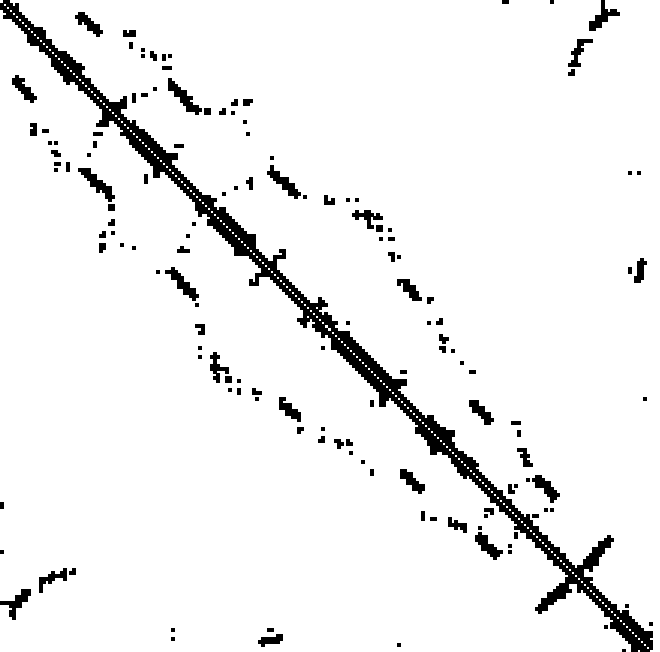
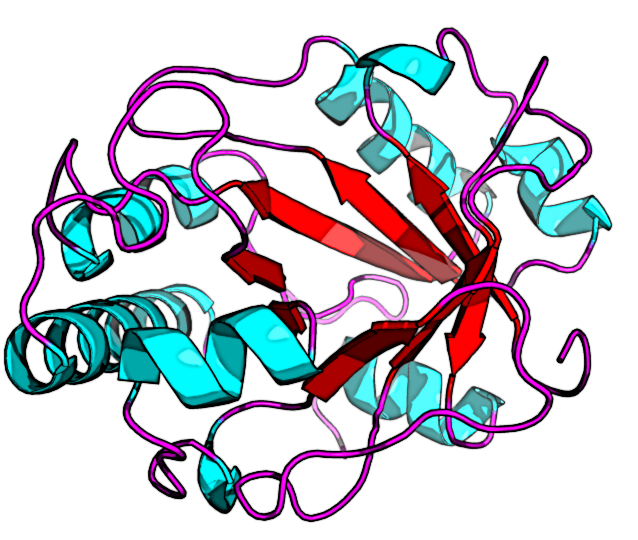
... Contact maps Structure

What is coevolution?


Observation: Homologous proteins impose strong constraints
on their sequence variability.


Assume: If two residues form a contact, a destabilizing substitution at one position is expected to be compensated by a substitution of the other position over the evolutionary timescale, in order for the residue pair to maintain attractive interaction.

Mutual information

(naïve attempt)


are observed frequencies and co-frequencies respectively.


works poorly due to transitivity. e.g. A-B and B-C, this model predicts A-C.


Maximum-entropy model / Markov Random Field

Least-constraint model that matches marginal distributions of and .


Brute force computational complexity of pairwise is .


Learned parameters
encodes individual propensity of each amino acid at position
statistical coupling of amino acid propensities between positions


Learning generative models for protein fold families
Balakrishnan, Kamisetty, Carbonell, Lee, and Langmead

DCA (direct coupling analysis)*

Focus on high MI pairs, use reduced two-residue systems.


PSICOV

Compute pairwise covariance over all pairs of sites for all residues from MSA. Invert the matrix with tricks to avoid singular matrices (assume sparsity, most entries are zero in inversion).


GREMLIN

Optimize the pseudolikelihood of

Models conditional distribution of the original joint distribution
instead of the joint distribution itself. Can add regularization
to prevent overfitting and prior knowledge.


encodes individual propensity of each amino acid at position
statistical coupling of amino acid propensities between positions


Target dataset


Pfam families with sequences with high resolution .
150 monomeric proteins residues; diverse set.


PDB-ID  Pfam-ID Nseq    Length  Description
========================================================================================
1GUUA   PF00249 10393   50      Myb-like DNA-binding domain
1BRFA   PF00301 1430    53      Rubredoxin
1AAPA   PF00014 2256    56      Kunitz/Bovine pancreatic trypsin inhibitor domain
1JO8A   PF00018 6287    58      SH3 domain
1KU3A   PF04545 8439    61      Sigma-70, region 4
1M8AA   PF00048 1062    61      Small cytokines (intecrine/chemokine), interleukin-8 like
1C9OA   PF00313 6807    66      'Cold-shock' DNA-binding domain
1VFYA   PF01363 1645    67      FYVE zinc finger
1CTFA   PF00542 2390    68      Ribosomal protein L7/L12 C-terminal domain
1KW4A   PF07647 1192    70      SAM domain (Sterile alpha motif)
1CC8A   PF00403 9383    72      Heavy-metal-associated domain
1ATZA   PF00092 7567    75      von Willebrand factor type A domain
1TIFA   PF05198 1947    76      Translation initiation factor IF-3, N-terminal domain
1H98A   PF00037 10421   77      4Fe-4S binding domain
1T8KA   PF00550 20685   77      Phosphopantetheine attachment site
1BDOA   PF00364 11826   80      Biotin-requiring enzyme
1AVSA   PF00036 13234   81      EF hand
1CXYA   PF00173 3200    81      Cytochrome b5-like Heme/Steroid binding domain
1I71A   PF00051 1082    83      Kringle domain
1ABAA   PF00462 5749    87      Glutaredoxin
1DSXA   PF02214 1372    87      K+ channel tetramerisation domain
1SMXA   PF10150 2203    87      Ribonuclease E/G family
1NPSA   PF00030 1153    88      Beta/Gamma crystallin
1PCHA   PF00381 3344    88      PTS HPr component phosphorylation site
1VJKA   PF02597 3283    88      ThiS family
1FNAA   PF00041 17137   91      Fibronectin type III domain
1G9OA   PF00595 14944   91      PDZ domain (Also known as DHR or GLGF)
1FK5A   PF00234 3346    93      Protease inhibitor/seed storage/LTP family

Data pipeline


Download, parse, and clean PDB.
Build FASTA and reference contact map.
Align each FASTA using HHBLITS*.
Score alignments with GREMLIN .
Build contact maps from GREMLIN.
(optional) Optimize contact map score with RF.
Fold coarse-grained protein from contact map.


* hhblits -i input.seq -n 4 -diff inf -cov 75 -e 0.0000000001
Dockerize GREMLIN's MATLAB for maximum performance.

Scoring

For a given protein and alignment GREMLIN gives tensor.


Reduce GREMLIN's tensor output:

Drop information about gaps.
Compute the Frobenius norm over each position.
Subtract average product correlation*, structural vs. shared ancestry


Top score model

Rank sort top diagonal of , take top contacts.
Typically values for .


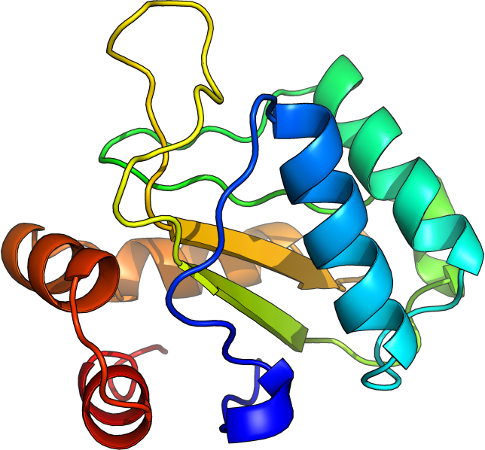
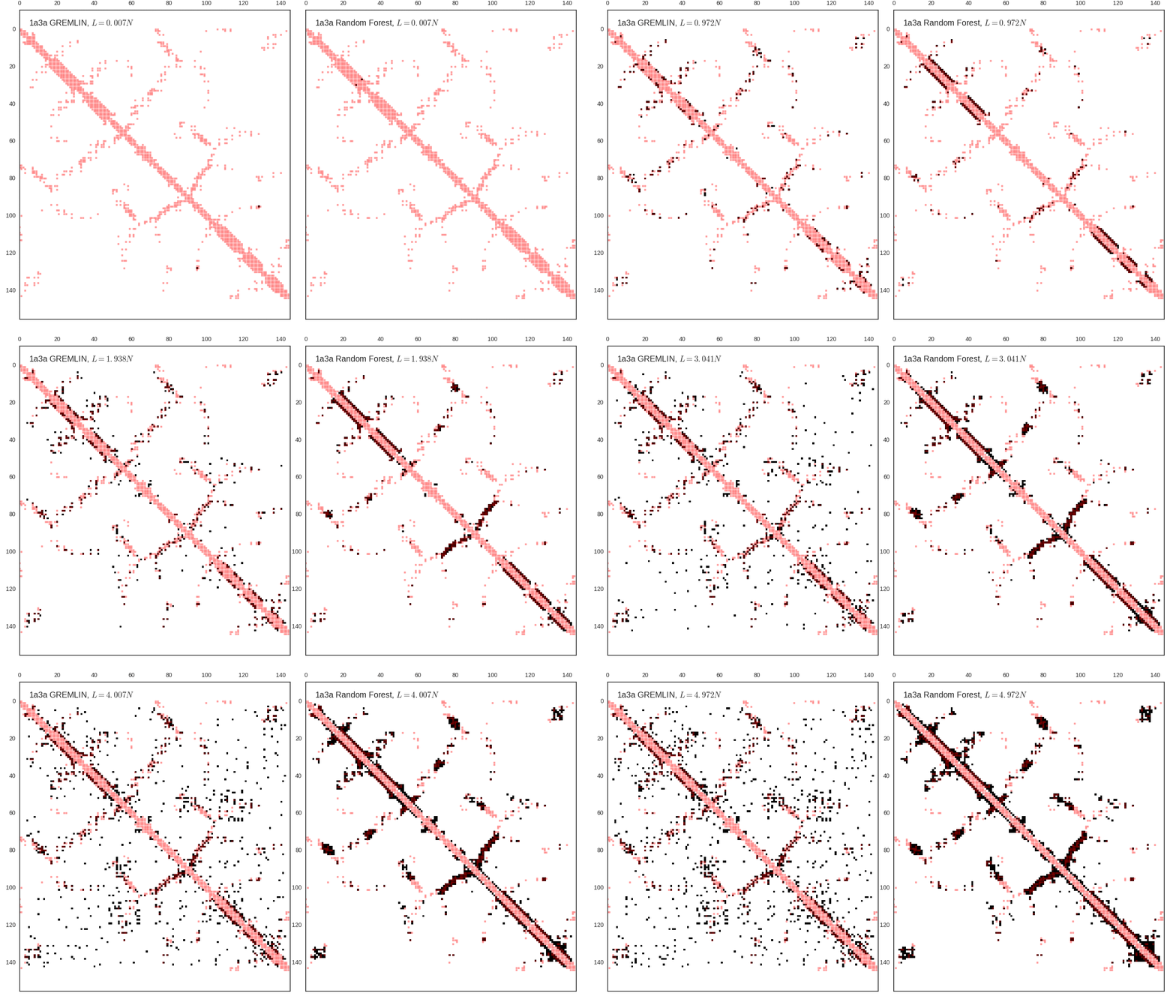
1a3a IIA MANNITOL FROM ESCHERICHIA COLI
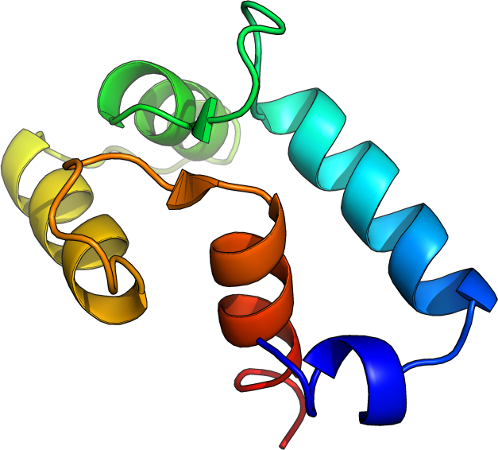
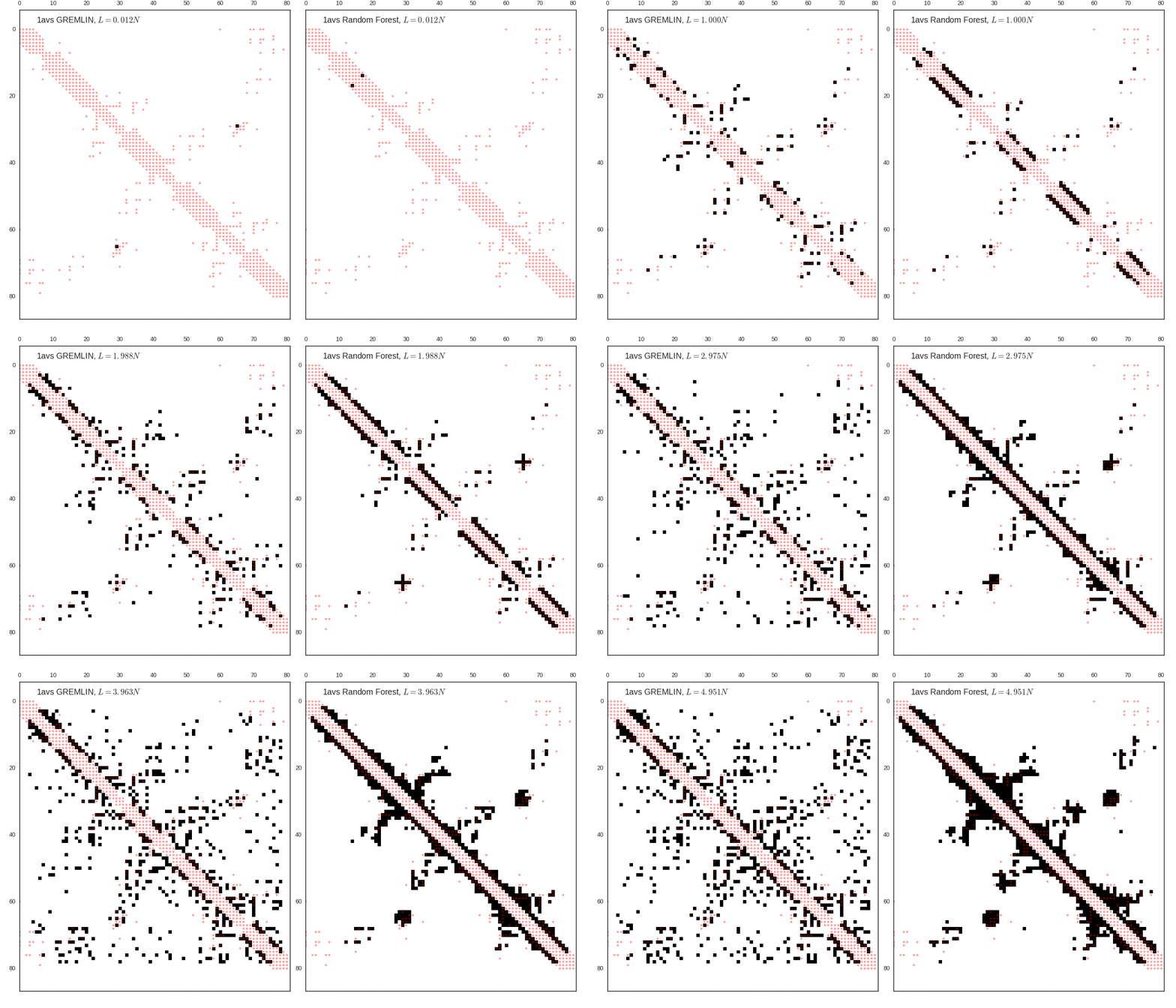
1avs CALCIUM-SATURATED N-TERMINAL DOMAIN OF TROPONIN C

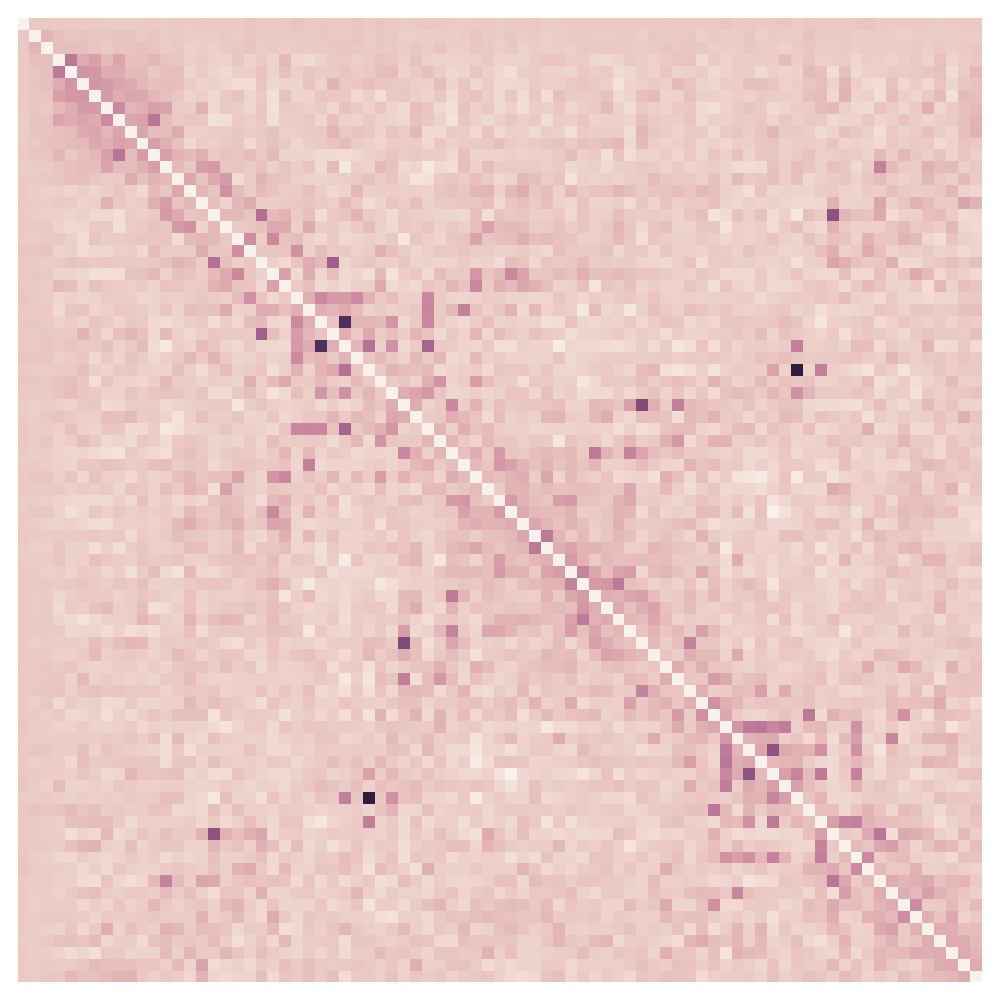
Example proteins, GREMLIN APC corrected score
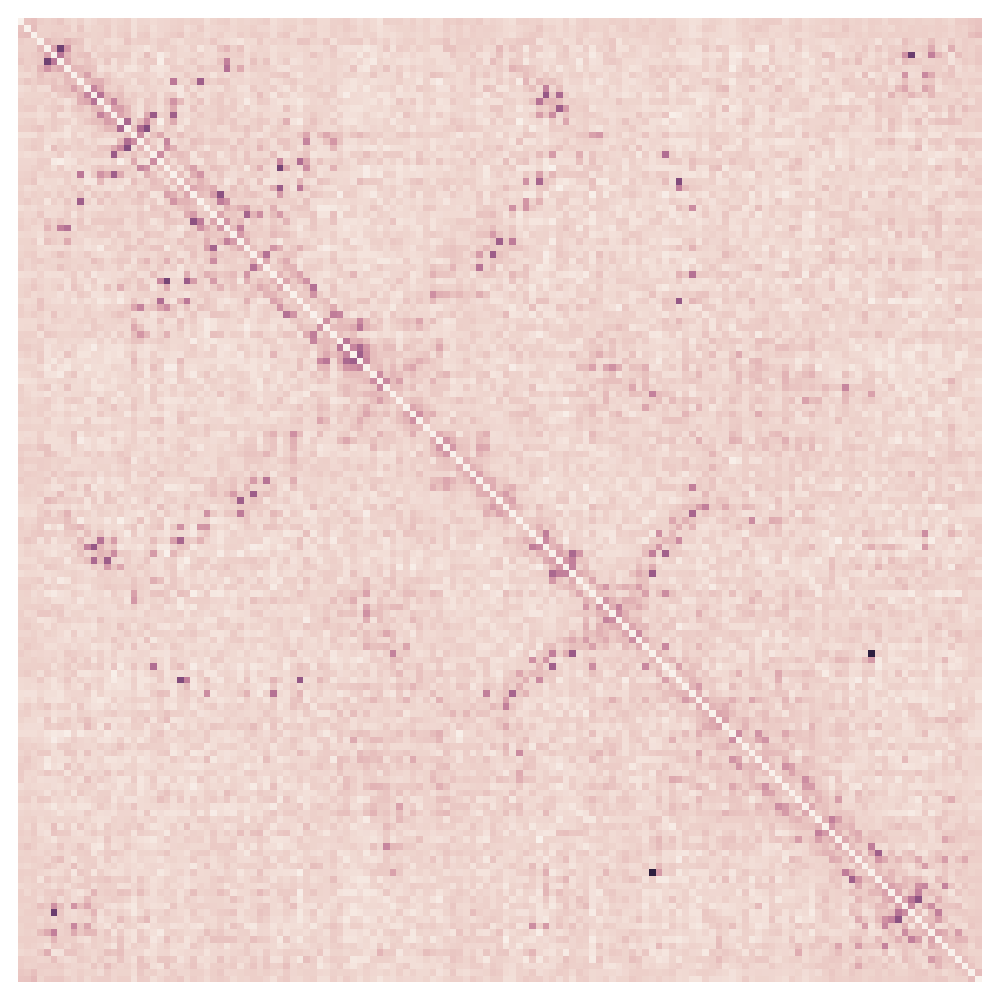
1a3a IIA MANNITOL FROM ESCHERICHIA COLI
1avs CALCIUM-SATURATED N-TERMINAL DOMAIN OF TROPONIN C

Performance measurements


Accuracy : Predictions that are correct :
Specificity : Non-contacts identified :
Precision : Contacts identified that are true :
Sensitivity : True contacts identified :


ROC curves measure Sensitivity vs Specificity.


False positives (FP) are worse than false negatives (FN).


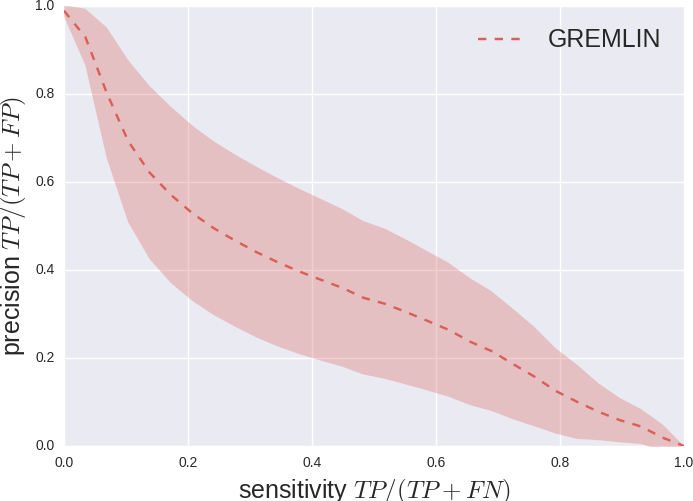
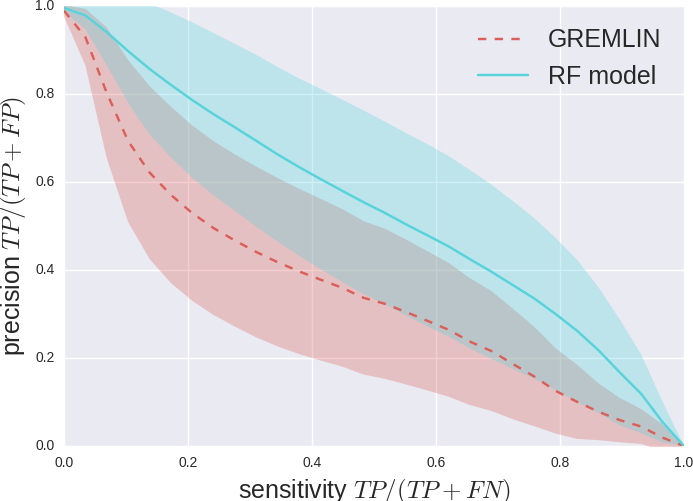
We measure Precision vs Sensitivity.

GREMLIN Predictions

Hypothesis:

Local structure can enhance contact prediction.
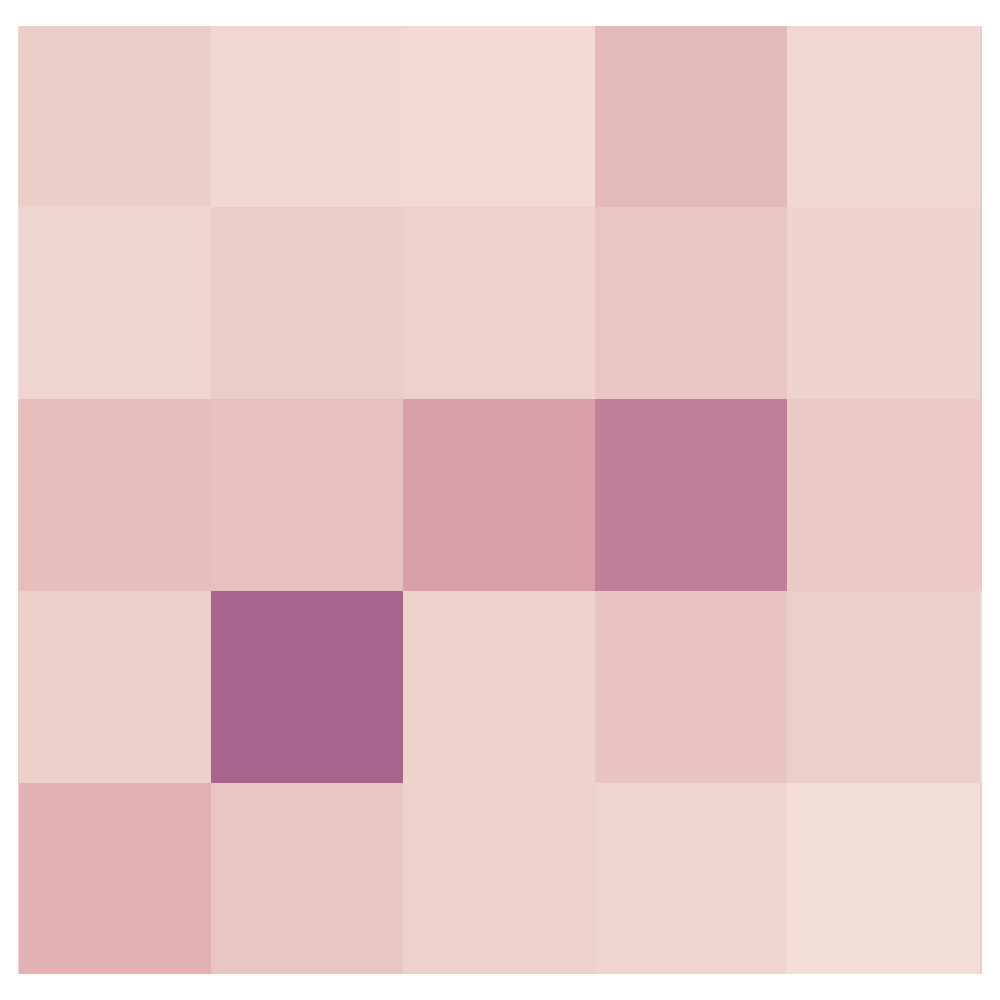

Secondary structure is local (helices, sheets, turns).

Random forest (RF) score model

Machine learn local pixel maps for contact/non-contact.


Normalize data: subtract mean, scale to unit variance.


Train with extremely random forests*, variant with dropout.


(e)RF's were more robust than traditional shallow learning like SVM.


*RF parameters kernel_window=2, n_trees=200, ratio_TP_to_TN=20

What are Random Forests?

Decision trees are good for simple data, but tend to overfit.
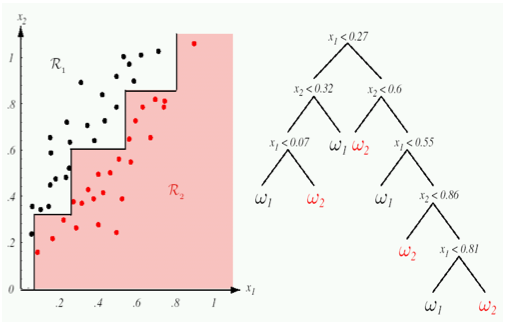

Random forests are multiple decision trees with 1] "random splits",
2] selective subsets, (each tree only gets to see a subset of the data).
This increases individual bias but the average corrects for overfitting.

Improved RF model Predictions
Contact map vs cutoff length (1a3a)
Contact map vs cutoff length (1avs)
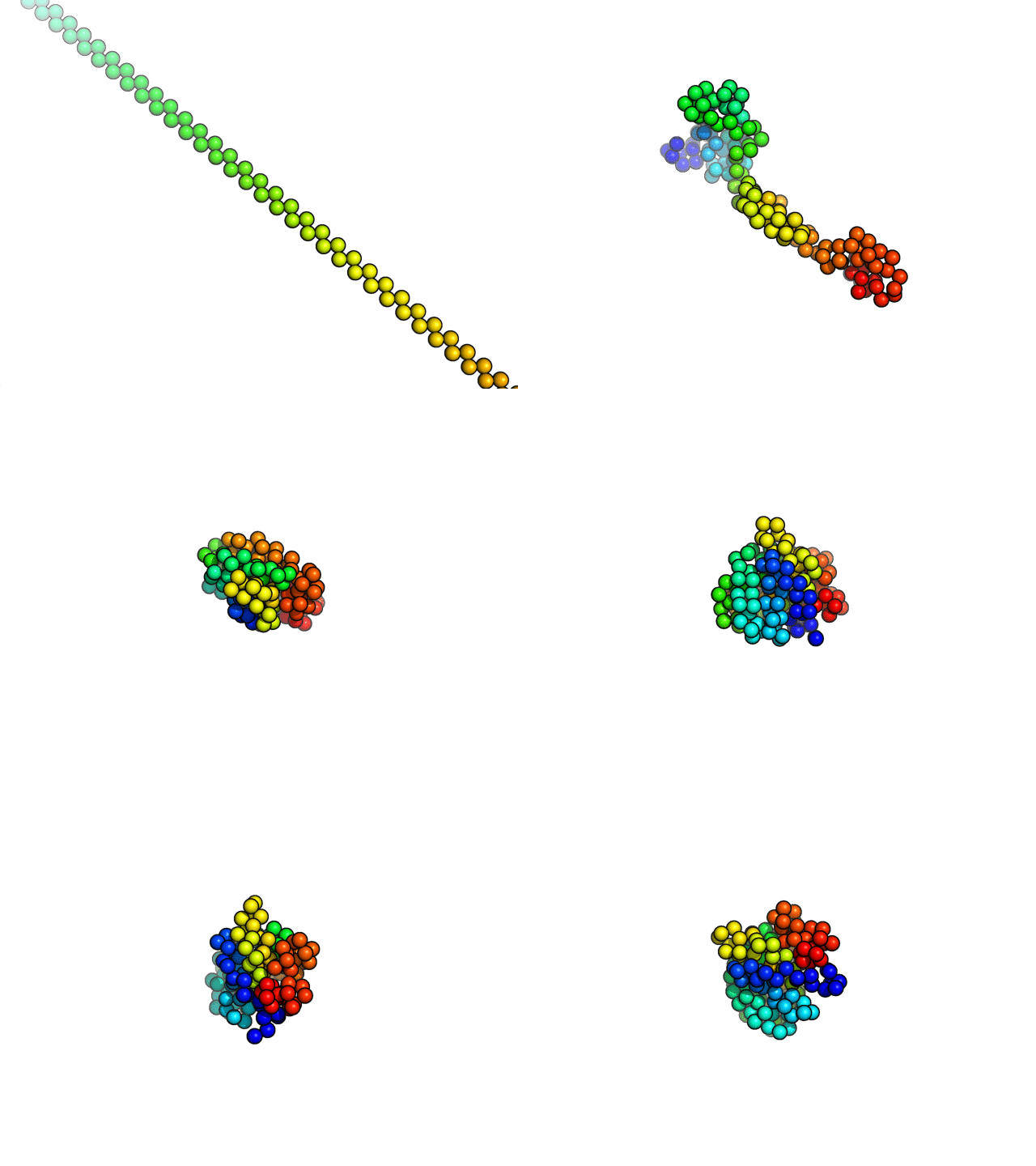
Folding simulations

coarse-grained MD simulation


Unbiased estimate of contact map fold.


No prior knowledge (ROSETTA fragments, SS pred., etc...).


Potential = Backbone + smoothed well with range ~ .

Rapid collapse to contact potential

coarse-grained MD simulations

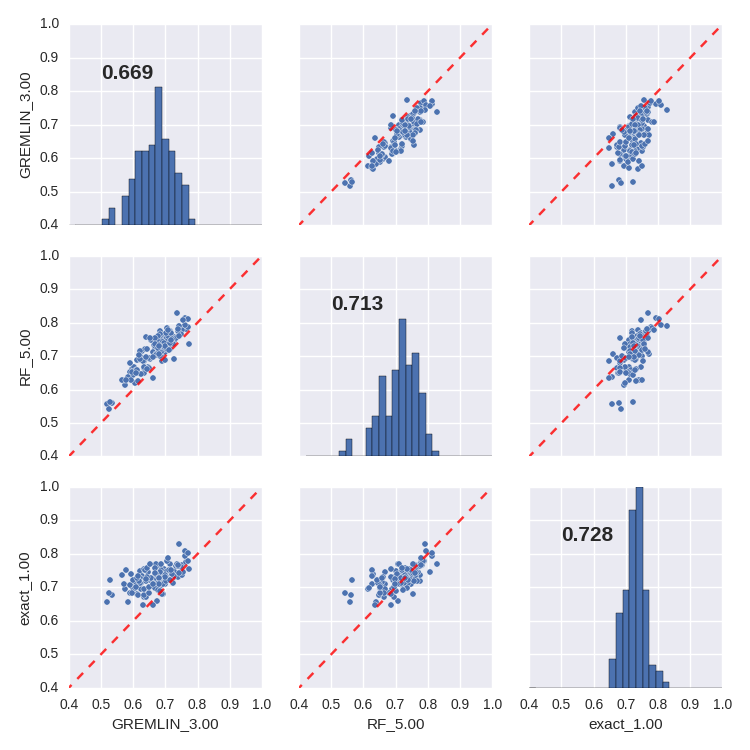
Folding simulations,
Features of the RF model

scientific insight beyond predictive capability

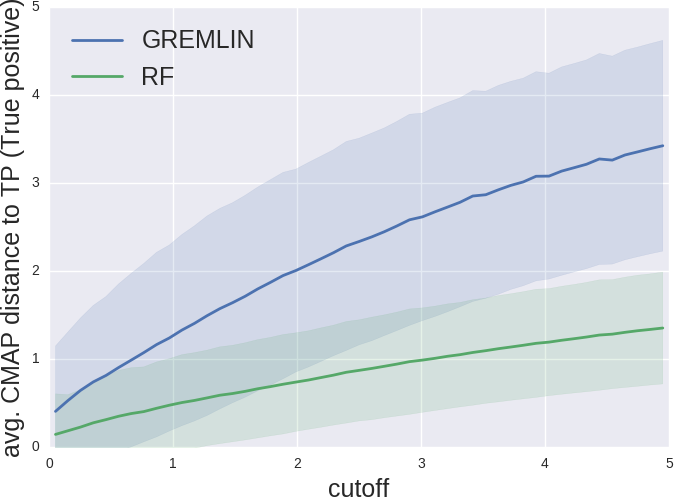
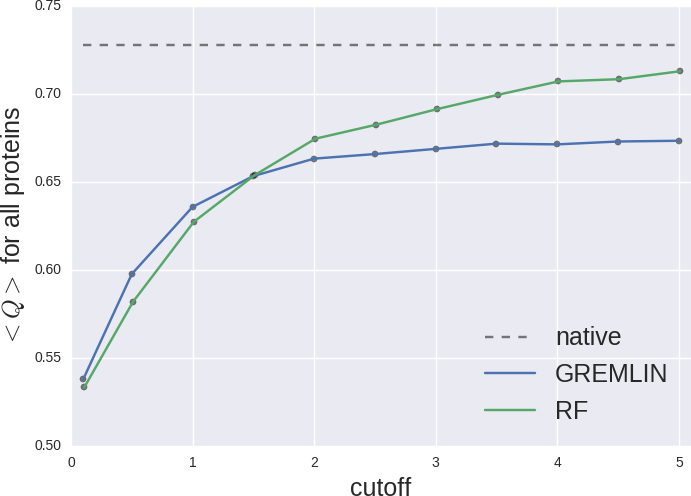
Predicted contacts are closer to true contacts
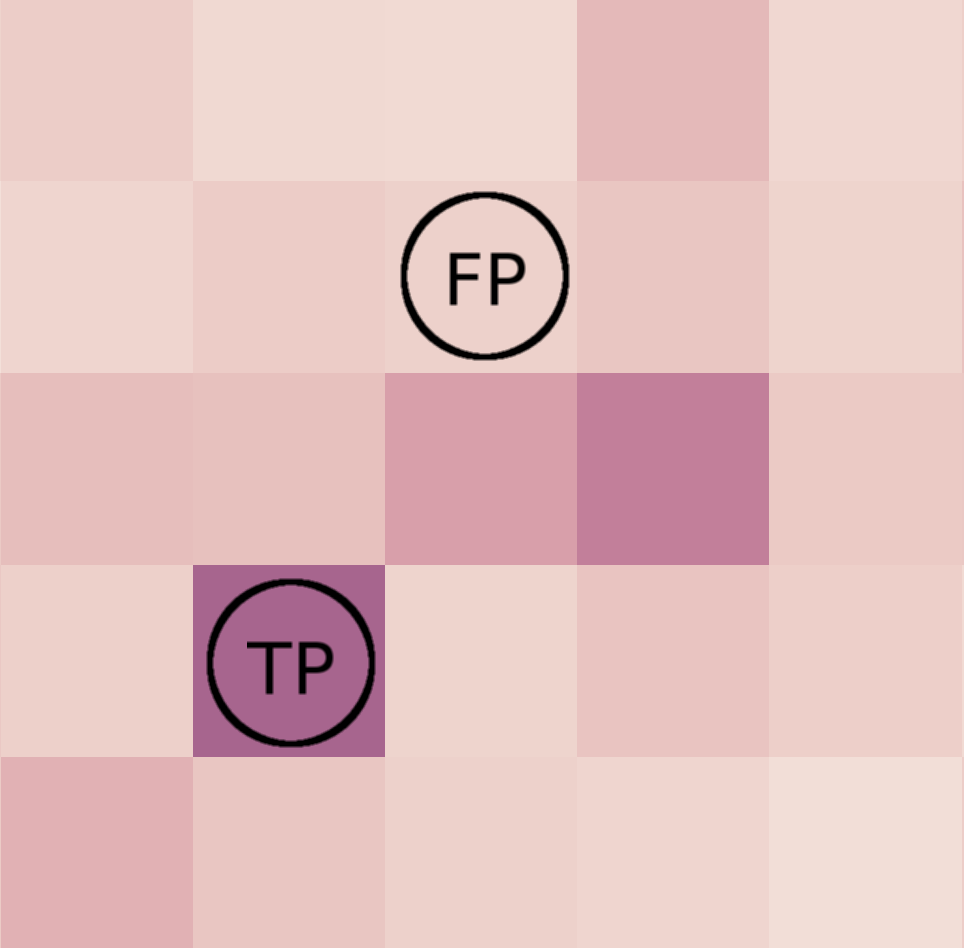

Distance from predicted contact to true contact
Average distance for all proteins

Improvement in folding

In potential, more contacts better RF fold.
Random Forest features (central difference most important)
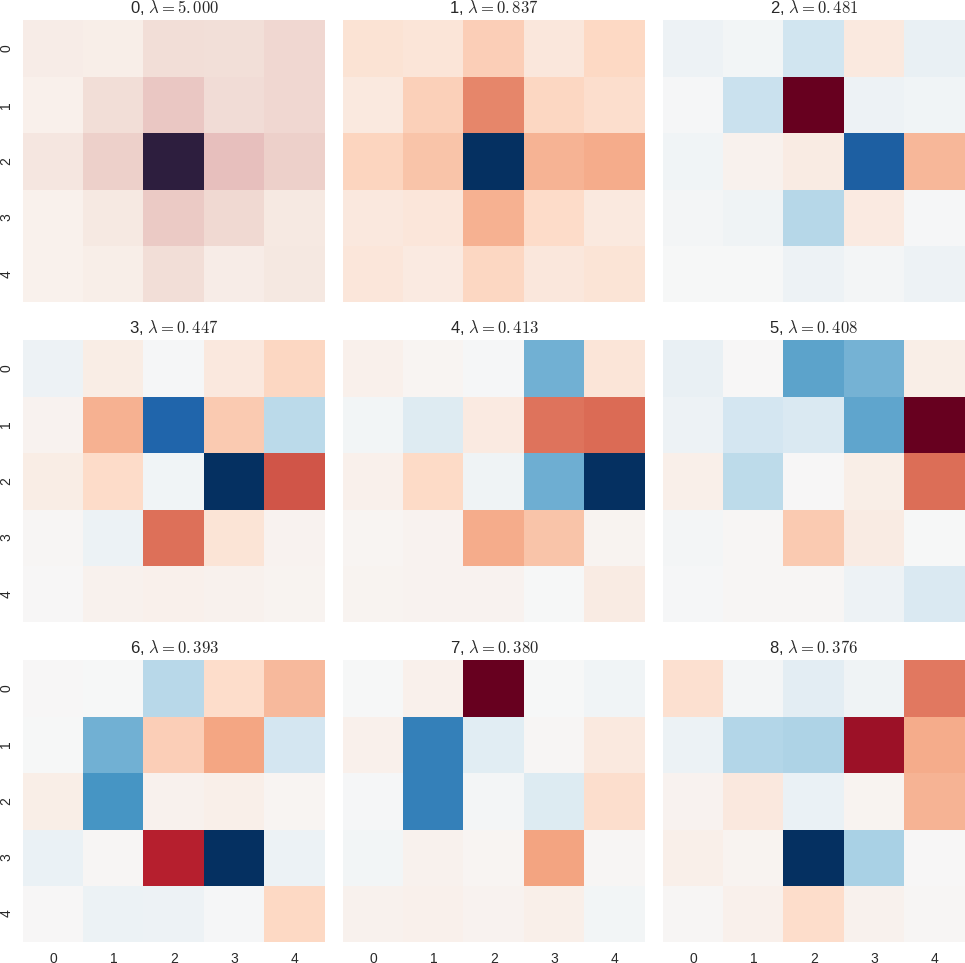
SVD of Decision Tree weights

Future work & Extensions


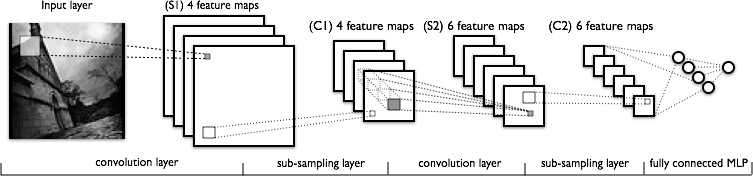
Convolutional neural networks to improve prediction:


can be used as an effective Hamiltonian for evolutionary movement.

Future work & Extensions


Enhanced structure prediction, ROSETTA et. al.


Disambiguation of intra/inter predictions.


Estimation of binding partners and hetrodimers from .

Thanks, you.


Robert Best (NIH/NIDDK)

Wenwei Zheng
Travis Hoppe
Pengfei Tian
Jan Domanski
Mathias Bellaiche


Jeff Gray (John Hopkins, Chemical Engineering)

Julia Joehler